
How to Wash Embroidered Shirts Without Puckering the Design
6 min read
To wash an embroidered shirt, turn it inside out, wash it cold or at 30 °C on a gentle cycle with a mild liquid detergent and similar colours, and skip bleach, softener and the tumble dryer. Hang it or lay it flat to dry, smoothing the fabric around the design while it is damp. If it needs ironing, press it inside out with a cloth over the back of the embroidery, never directly on the stitches.
Why a shirt needs more care than a sweatshirt
A sweatshirt is thick enough to hide a lot. A t-shirt, a crop top or a cotton button shirt is not. The fabric is lighter, so the embroidery is a bigger, heavier object in comparison, and anything that makes the fabric shrink, stretch or twist shows up straight away as ripples around the design.
Shirts also get washed far more often. A hoodie can go a few wears between washes; a t-shirt worn on a warm day or at a concert usually cannot. More washes means more friction, more heat if you are careless, and more chances for the thread to fade. The good news is that the habits that protect embroidery on a shirt are simple, and once they become routine they take no extra time.
Before anything else, read the care label inside the side seam. The tips below are general good practice for embroidered garments, but the label knows the exact fabric. If it says something stricter, follow the label.
Know your fabric: cotton, stretch and button shirts
Not every embroidered top behaves the same way in the wash, and it helps to know which one you are holding.
- 100% cotton t-shirts, classic or oversized: soft and breathable, but cotton can shrink a little if it gets hot. Keep the temperature low and they stay true to size.
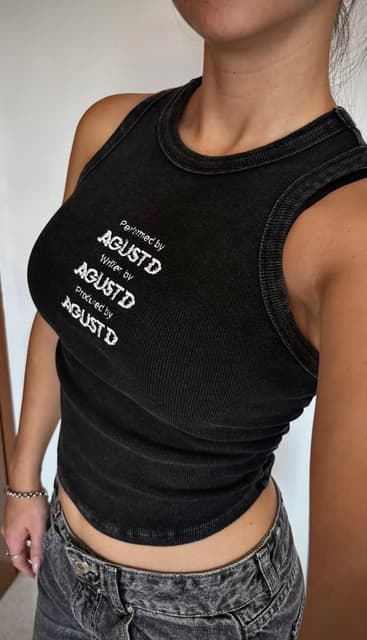
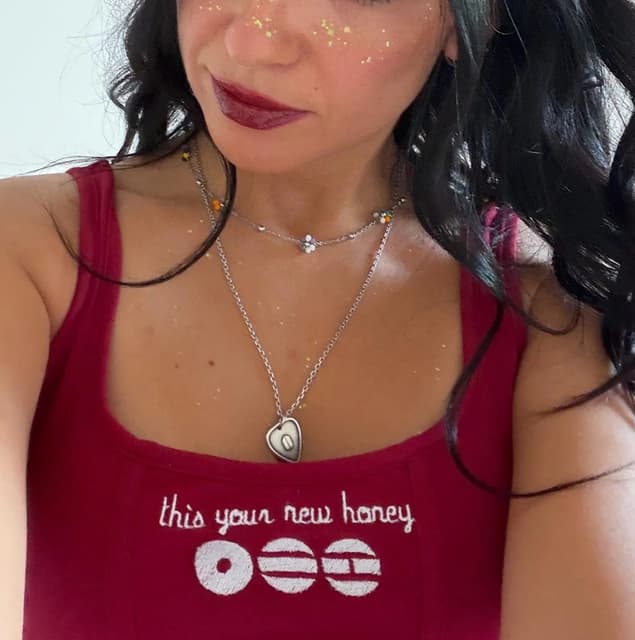
- Stretch tops, like fitted crop tops and tank tops in cotton with a small amount of elastane: the elastane gives them their snug fit, and heat is what wears it out. Cold washes and no dryer matter most here.
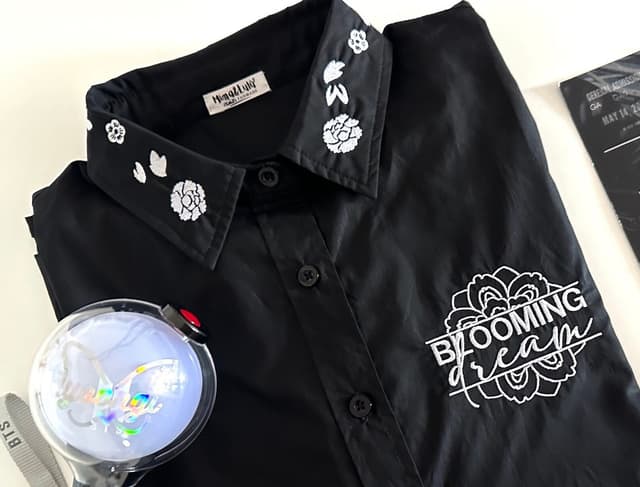
- Cotton button shirts: the fabric is crisp and woven rather than knitted, so it creases more and is the one piece you may actually want to iron. Buttons and collars need a little attention too.
- Light colours and white: lovely with coloured thread, but they pick up dye from darker clothes. Wash them with other light colours only.
Step by step in the washing machine
Most embroidered shirts are perfectly happy in the machine if you prepare them properly. The aim is to reduce friction on the stitches and keep the fabric from changing size around them.
- Turn the shirt inside out. On a button shirt, do up the buttons first so the fronts do not twist and pull on the design.
- Put it in a mesh laundry bag, especially small pieces like crop tops and tank tops that can wrap around other clothes.
- Choose a gentle or delicate cycle, cold or at 30 °C. Higher temperatures rarely make a cotton tee cleaner in a way you would notice.
- Use a mild liquid detergent and a bit less than usual. Powder can leave pale marks in dense stitching.
- Leave out bleach, strong stain removers and fabric softener. Bleach can fade coloured thread unevenly, and softener coats stretch fibres.
- Pick a low spin speed if your machine lets you, and take the shirt out as soon as the cycle ends so it does not sit creased in the drum.
After a concert or a hot day: sweat, deodorant and make-up
A shirt you have worn for ten hours in a stadium deserves a little first aid before it joins the laundry pile. Sweat that dries into cotton can leave yellowish marks over time, and deodorant builds up under the arms as a stiff, pale layer. Rinsing the underarms in cool water on the same evening, or at least the next morning, does more than any special product later.
For a foundation or lipstick mark near the neckline, dab it with a drop of mild detergent and cold water, working from the edge of the stain towards the centre. Keep away from the embroidery as much as you can and never scrub the thread. If a mark sits right on the design, it is safer to treat it gently a couple of times than to attack it once with a strong stain remover.
One more habit worth picking up: do not leave a damp shirt rolled up in your bag overnight. It creases deeply around the design and can start to smell, which leads to a hotter wash than the shirt needed.
Drying and ironing without flattening the stitches
The tumble dryer is the quickest way to make embroidery pucker on a thin shirt: the fabric shrinks a little, the stitched area does not, and the difference becomes ripples. Instead, give the shirt a gentle shake while it is still damp, smooth the fabric around the design with your fingers, and let it dry away from radiators and strong sun. Unlike a heavy sweatshirt, a t-shirt or a button shirt can dry on a wide hanger without stretching. Stretch crop tops and tank tops are happiest dried flat.
Most tees never need ironing if you hang them carefully. Button shirts are different. Iron them inside out, at the temperature the label allows for cotton, and work around the embroidery rather than over it. When you reach the design, place a thin cotton cloth or a tea towel over the back of it and press lightly, without sliding the iron. Laying the embroidered area face down on a folded towel helps the stitches keep their raised texture instead of being crushed flat.
Small mistakes that add up
None of these ruins a shirt in one go, but repeated over a season they are what makes an embroidered tee look tired.
- Washing a light shirt with new jeans, which can transfer blue dye onto the fabric and the thread.
- Washing right side out with anything that has velcro, hooks or zips, which snag the stitches.
- Pulling a loose thread instead of trimming it with small scissors.
- Hanging a stretch crop top on a thin hanger for weeks, which stretches the shoulders.
- Storing tees in a tight pile with the design folded sharply in half. Fold so the crease runs beside the embroidery, not through it.
Our embroidered shirts and tops
At Mima&Lulù⁷ we are two ARMY in Rome with an embroidery machine, and we design and embroider every piece ourselves in Italy. Our designs are fanmade, inspired by BTS and not affiliated with BTS, HYBE or BigHit Music. Everything above applies to our shirts and tops, starting with inside out and no dryer.
BLOOMING DREAM, an oversized button shirt in 100% cotton from €42.90, from our D-DAY collection for Suga: the one to iron carefully around the design. The AGUST D tank top, from €30.90, is a stretch top in 95% cotton and 5% elastane, also available as an oversized or fitted t-shirt, and the 'Aliens' fitted crop top from our Arirang collection, from €28.90, uses the same stretch blend, so cold washes and drying flat keep its fit. Each piece is ready in about 7 days after payment is confirmed, plus courier time, and shipping is free in Italy over €89 and in the European Union over €119 of products.
The pieces in this article
FAQ
Can you wash embroidered shirts in the washing machine?
Usually yes, unless the care label says otherwise. Turn the shirt inside out, use a mesh bag and a gentle cycle, cold or at 30 °C, with a mild liquid detergent.
Why does embroidery pucker on a t-shirt after washing?
Usually because the thin fabric shrank or stretched while the stitched area did not, often after a hot wash or the dryer. Smoothing it while damp and drying it away from heat helps.
How do you iron an embroidered button shirt?
Inside out, at the temperature the label allows, working around the design. Over the embroidery, use a thin cloth and press lightly without sliding the iron.
Can stretch crop tops go in the dryer?
It is best not to. Heat wears out the elastane that gives them their fit, so wash them cold and dry them flat.