
Embroidery vs Screen Printing: How They Differ and When to Choose Each
5 min read
Screen printing pushes ink through a mesh stencil onto the fabric, so it suits large, flat, colourful designs and light t-shirts. Embroidery sews the design into the fabric with thread, so it has texture and depth and, in general, keeps its look through many more washes without cracking or peeling. Choose print for big graphics and summer tees, embroidery for logos, lettering and pieces you plan to wear for years.
How each technique works
Screen printing is one of the oldest ways of decorating clothes. A fine mesh screen is prepared with a stencil of the design, ink is pushed through the open areas with a squeegee, and the garment is then heat cured so the ink sets. Each colour usually needs its own screen, which is why screen printing works best when the same design is printed many times.
Embroidery works in a completely different way. A machine sews the design into the fabric with coloured thread, stitch by stitch, following a digital file that someone has to prepare in advance, deciding the direction, density and order of every stitch. A stabiliser sits behind the fabric to keep the design flat. The result is not a layer on top of the garment but part of it.
You will also meet other print methods, such as direct to garment or heat transfer prints. They are close cousins of screen printing in the sense that matters here: the design is ink or film sitting on the surface, not thread sewn through it.
Look and feel
A screen print is flat and smooth. Good printing can be very sharp, with clean edges and bold colour, and on a soft cotton tee a thin print is barely noticeable to the touch. A thicker print, especially a large one, can feel a little rubbery and make that area of the shirt stiffer and warmer.
Embroidery has relief. You can run your finger over it and feel the lines, the thread catches the light with a slight sheen, and the colours look rich because they come from dyed thread, not ink. It reads as a more finished, crafted detail, which is why it is the classic choice for logos on jackets, caps and polo shirts. The trade-off is that very fine details, gradients and photographic images are hard or impossible to embroider.
Durability and washing
This is where the two differ most for everyday clothes. A screen print that is well made and well cured can last a long time, but ink sits on the fibres, and over many washes, heat and stretching it can fade, crack or start to peel, particularly on large solid areas.
Embroidery, in general, keeps its colour and shape much longer, because the thread is part of the fabric and does not crack. Its weak points are different: stitches can snag on zips or velcro, and the fabric around the design can pucker if the garment shrinks in a hot wash or the dryer. Both methods last longer with the same simple habits: wash inside out, on a gentle cycle at a low temperature, and skip the tumble dryer.
Ironing is the other difference worth knowing. You should never iron directly on a print, which can melt or smear. Embroidery is more tolerant, but it is still best ironed inside out with a cloth in between.
Which designs suit which method
Neither technique is better at everything. The design itself is usually what decides.
- Big, full-colour artwork or photos: screen printing, or another print method. Embroidering a huge solid area makes a garment heavy and stiff.
- Lettering, logos, initials and line art: embroidery, which turns simple shapes into something tactile and long lasting.
- Very light or stretchy fabrics: print is often easier, since dense stitching can pull at thin fabric. Good embroidery on a tee needs the right density and a soft backing.
- Sweatshirts, caps and bags: embroidery shines, because sturdier fabrics carry the stitches well.
- Small details like cuffs, sleeves or a back design: embroidery is perfect for these subtle touches.
Cost, and why prices differ
Screen printing has a setup cost for every screen and colour, but once it is ready each extra print is fast and cheap. That makes it the natural choice for large runs, such as tour shirts or event t-shirts made by the thousand.
Embroidery is priced more by time and stitches. Every design has to be digitised first, a skilled job done design by design, and every piece is sewn one at a time on the machine, so a larger or more detailed design takes longer. For small makers, that is also what makes embroidery interesting: it suits small batches, made when they are ordered, rather than huge stocks.
How to tell them apart in a product photo
Online it is not always obvious what you are buying, and some listings say embroidered when the design is really printed. Zoom in on the pictures before you order. Embroidery shows individual stitches, visible lines of thread and a slight raised edge, and often small shadows around letters. A print looks flat and uniform, with smooth colour fills and sometimes fine gradients that thread cannot reproduce.
If a shop only shows a digital mockup, look for a photo of the real piece, ideally a close-up or a picture of the inside, where embroidery leaves the back of the stitches and the stabiliser visible. A shop that knows its craft will usually be happy to show it.
Why we chose embroidery
At Mima&Lulù⁷ we are two ARMY in Rome with an embroidery machine, and everything we make is embroidered in Italy, not printed. For fan clothing that gets worn constantly, from concerts to lazy Sundays, we wanted designs that keep their look season after season and have the texture you can feel. Our pieces are fanmade, inspired by BTS and not affiliated with BTS, HYBE or BigHit Music. Each one is ready in about 7 days after payment is confirmed, plus courier time.
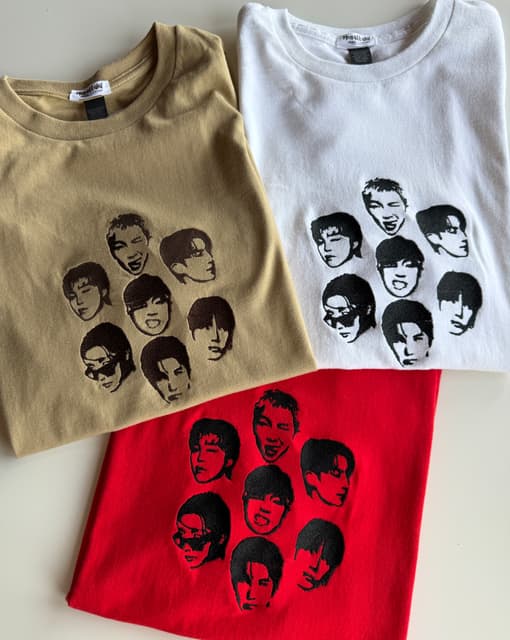
- OT7 portraits, from €36.90 as an oversized sweatshirt or t-shirt: a design that shows how much line work embroidery can hold.
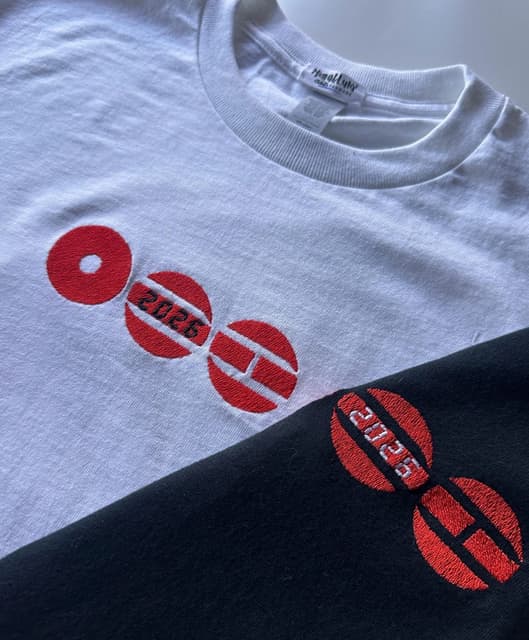
- The Arirang World Tour oversized t-shirt, from €39.90, in 100% cotton with embroidery on the front and the back.
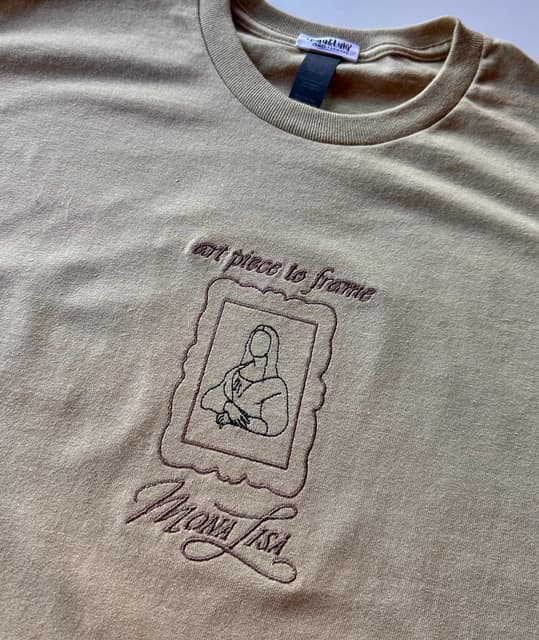
- Mona Lisa, from €34.90, an oversized t-shirt in 100% cotton inspired by j-hope, proof that embroidery works on a tee too.
The pieces in this article
FAQ
Does embroidery last longer than screen printing?
In general, yes. Embroidery is sewn into the fabric and does not crack or peel, while a print can fade or crack over many washes, although a well made print can also last a long time.
Is embroidery more expensive than screen printing?
Usually, especially for small quantities, because each design has to be digitised and each piece is sewn one at a time. Screen printing gets cheaper the more copies are made.
Can you embroider on a t-shirt?
Yes. On light cotton the embroidery needs the right stitch density and a soft backing inside, so that it sits flat without pulling the fabric.
How can I tell if a shirt is embroidered or printed?
Look closely: embroidery shows individual stitches and a raised edge, and the back of the stitches is visible inside. A print is flat and smooth.